Beschreibung
Erhaltung: vf- | Abkürzungen
Katalognummer: Tūwanuwa
Durchmesser: 15,00 mm
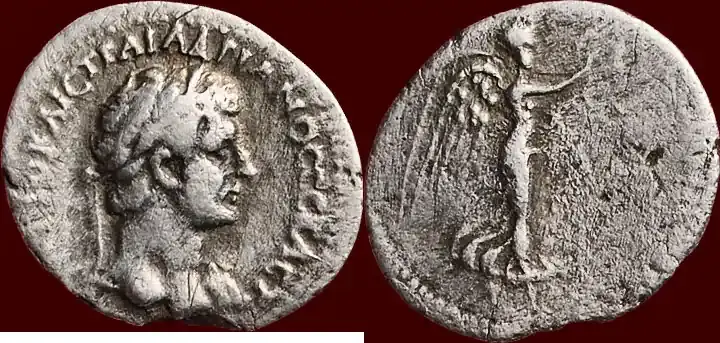
weight 2,76gr. | bronze Ø 15mm.
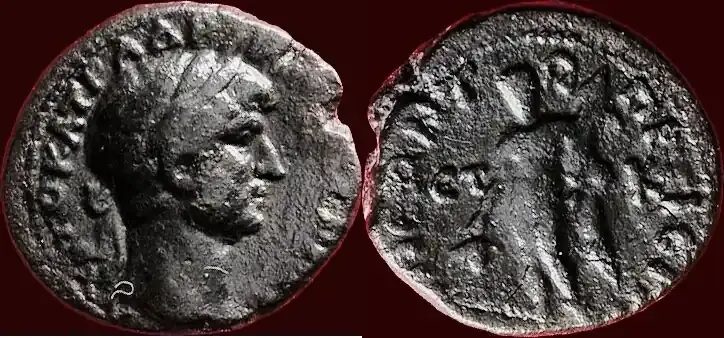
obv. Laureate head of Hadrianus right, surrounded by the legend
rev. Perseus standing facing, holding head of Medusa and harpa,
TK across field, surrounded by the legend
The city of Tūwanuwa was first mentioned in the texts of the Hittite Empire, as a city located in southeastern Anatolia. Tūwanuwa was part of the territories that the 17th century BC founder-king of the Hittite Old Empire, Labarna I, had conquered and which his sons divided among each other and established their rule there. After the collapse of the Hittite Empire, Tūwanuwa became the centre of the Luwian-speaking Syro-Hittite state of Tuwana in the region of Tabal, in whose southernmost regions it was located. The kingdom of Tuwana was located in southern Cappadocia, to the east of the Konya Plain and the Obruk Plateau across Lake Tuz and the Melendiz Mountains until the Hasandağ volcano to the north. By c. 675 BC, Neo-Assyrian sources no longer referred to the local Tabalian kings. By the Graeco-Roman period, the city became known as Tyana and the country around it as Tyanitis. It is the reputed birthplace of the celebrated philosopher (and reputed saint or magician) Apollonius of Tyana in the first century AD. According to Strabo the city was known also as Eusebeia at the Taurus. Under Roman Emperor Caracalla, the city became Antoniana colonia Tyana. After having sided with Queen Zenobia of Palmyra, it was captured by Aurelian in 272, who would not allow his soldiers to sack it, allegedly because Apollonius appeared to him, pleading for its safety. In 372, Emperor Valens split the province of Cappadocia in two, and Tyana became the capital and metropolis of Cappadocia Secunda. In Late Antiquity, the city was also known as Christoupolis. BMC| Ganschow 1014b | RPC.III.2958 R
Attractive dark patina. Rare.
vf-