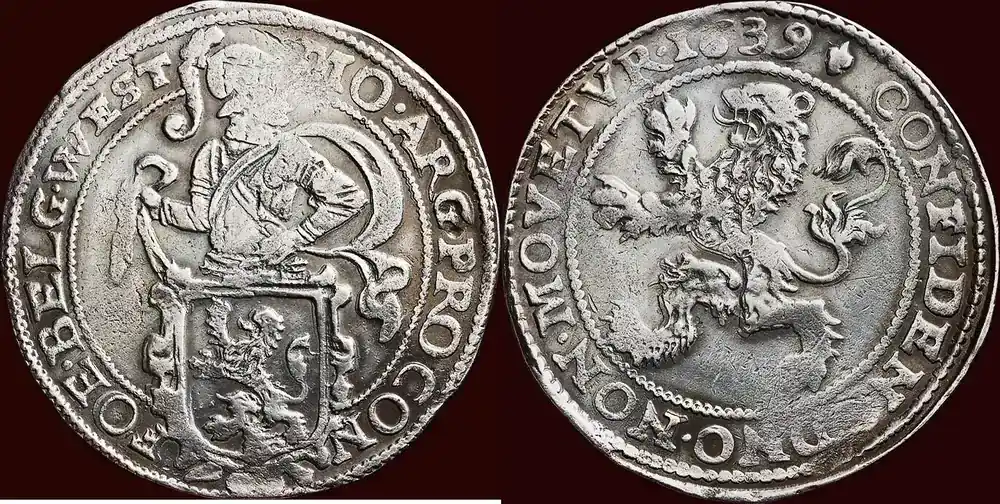
Beschreibung
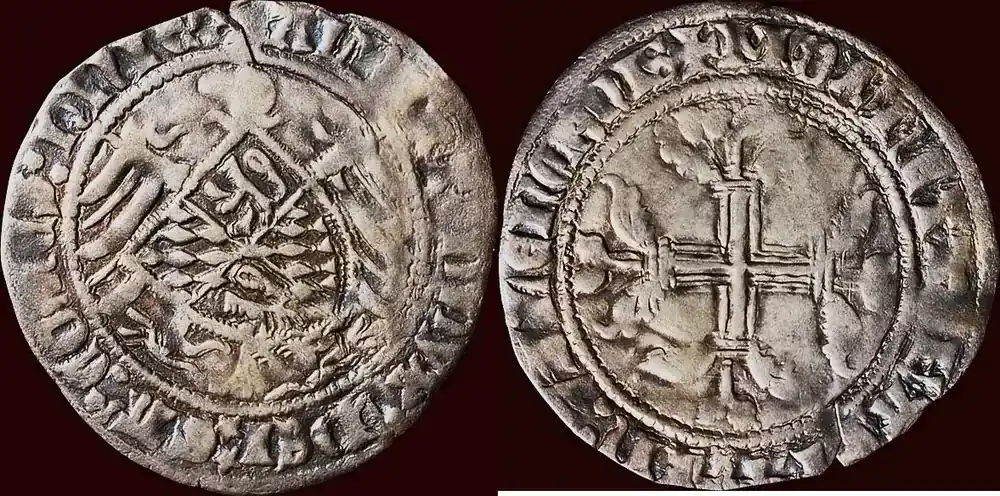
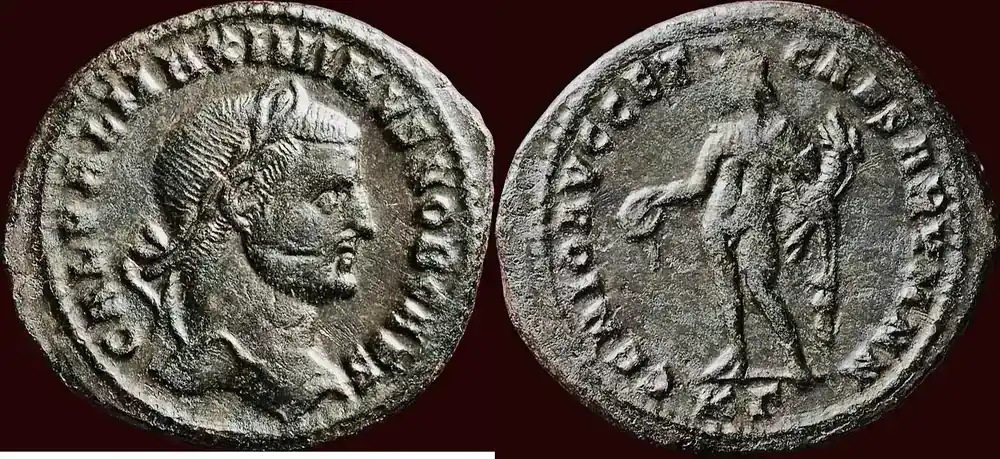
Erhaltung: ss à ss+ | Abkürzungen
Katalognummer: leeuwendaalder
Gewicht: 26,95 g
Durchmesser: 42,00 mm
gewicht 26,95gr. | zilver Ø 42mm.
muntmeester Nicolaas Wijntgens
muntmeesterteken lelie
De leeuwendaalder werd in 1575 door de provincie Holland ingevoerd. Deze munt bleek een groot succes en genoot spoedig veel vertrouwen zowel in de Nederlanden als daarbuiten. Zo was het ook een zeer geliefde handelsmunt in de Levant. Het was dan ook niet vreemd dat ook de andere provincies dit munttype gingen slaan,aanvankelijk nog met de Hollandse titel (zgn.Hollandse voet). In 1606 werd deze munt opgenomen onder de generaliteitsmunten,waardoor de Hollandse titel bij de andere provincies en steden van de munten verdween. De Hollandse leeuw op de keerzijde bleef echter wel gehandhaafd. Binnen de landstreek West-Friesland, gelegen in het Noorderkwartier van de provincie Holland, was de Munt afwisselend gevestigd te Hoorn, Medemblik en Enkhuizen. Deze leeuwendaalder is geslagen te Enkhuizen in een tijd dat deze stad haar grootste bloeitijd doormaakte. De stad telde in de 17e eeuw de grootste haringvloot van de Nederlanden, en bezat tevens een kamer van de VOC. Ook de West-Indische Compagnie was in de stad vertegenwoordigd. Door handel op de Oostzeelanden, Engeland, West-Afrika en Indië werd Enkhuizen rijk. De stad telde zon 25.000 inwoners, aanzienlijk meer dan het huidige aantal. The lion dollar was introduced in 1575 by the province of Holland. This coin proved to be a great success and soon enjoyed great confidence both in the Netherlands and abroad. It was also a very popular trade coin in the Levant. It was therefore not surprising that the other provinces also started minting this type of coin, initially with the Dutch title (so-called Hollandse voet). In 1606 this coin was included among the generality coins, which meant that the Dutch title disappeared from the coins of the other provinces and cities. The Dutch lion on the reverse was retained, however. Within the region of West Friesland, a part of the province of Holland, the Mint was alternately located in Hoorn, Medemblik and Enkhuizen. This lion dollar was minted in Enkhuizen at a time when the city was experiencing its greatest heyday. In the 17th century, the city had the largest herring fleet in the Netherlands, and also had a chamber of the VOC. The West India Company was also represented in the city. Enkhuizen became rich through trade with the Baltic countries, England, West Africa and the Indies. The city had around 25,000 inhabitants, considerably more than the current number. Delmonte 836 | Verkade 66.4 | HNPM.17
CNM.2.46.24 | Pannekeet 34 | Davenport 4870
minieme zwaktes van de slag
zfr à zfr+