Beschreibung
Erhaltung: ss / vz | Abkürzungen
Katalognummer: Cohen 165 | RIC 1266 | BMC 872 | MIR 27-6/10 | Sear 5198var.
Durchmesser: 32,00 mm
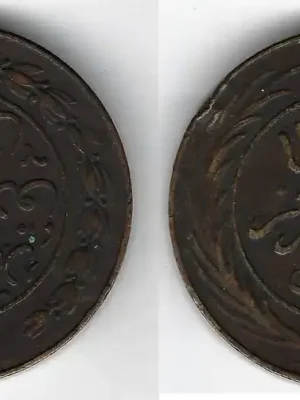
weight 23,02 | bronze Ø 32mm.
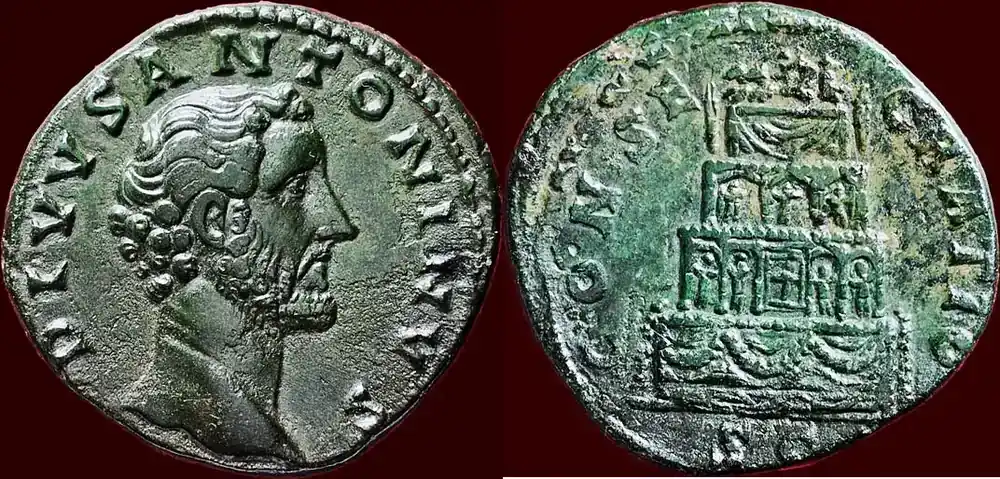
obv. Head of Antoninus Pius, bare, right,
surrounded by the legend DIVVS ANTONINVS
rev. Pyre in four tiers, decorated with swagged hangings an garlands,
surmounted by facing quadriga, surrounded by the legend
CONSECRATIO, S C below
From the formation of Rome to the mid-2nd century AD cremation was the more common method after somebody died. In the event of cremation, the body was taken to the necropolis (city of the dead) and put upon a funeral pyre. It was then burned, and the ashes and remaining fragments of bones and teeth were interned in a funerary urn. It was believed that until the body was interred, the shade(spirit) had not crossed the River Styx yet (the river that takes one from the World of the Living to the World of the Dead). Thus, there was a sense that the psychic impression of the deceased still lingered around friends and family, and the spirit would become angered if anything negative was said about it. After the mid- 2nd century AD inhumation (or burial) eventually took over as the preferred method. The body would be placed inside a coffin, called a sarcophagus, which was often massive and richly decorated. The body was not buried with any possessions. This was a very old practice throughout the Mediterranean, but one that was hardly ever used in Rome, especially when cremation was the most common method.
After the death of an Emperor, he would be buried inside the city. This was an honor reserved for only the most exceptional and illustrious people most Romans had to be buried outside of the city. It was also believed that Emperors did not become shades (spirits) like others did rather, they became Gods through a process known as apotheosis. As such, the Emperors commemoration was much more impressive and more expensive monuments were erected. Trajans Column, under which the Optimus Princeps ashes were buried, is one of the most well-known Roman monuments.
Cohen 165 | RIC 1266 | BMC 872 | MIR 27-6/10 | Sear 5198var.
Attractive greenblack patina. Beautiful portrait.
vf/xf